READ

22 November 2024

A 'virtuous evolution of the yoga market.

Edited by Barbara Biscotti and Chiara M. Travisi

A 'virtuous evolution of the yoga market.

A virtuous evolution of the yoga marketplace

Edited by Barbara Biscotti and Chiara M. Travisi


Chiara M. Travisi: PhD in Economics and Business Administration; Iyengar® Level 3 Teacher, LOY (Light on Yoga Italia, Ass. Italiana Iyengar Yoga) Board Member


Barbara Biscotti: Professor of Roman Law and Rights of Antiquity menbro of the DIrective Council of YANI (Yoga National Teachers Association) 


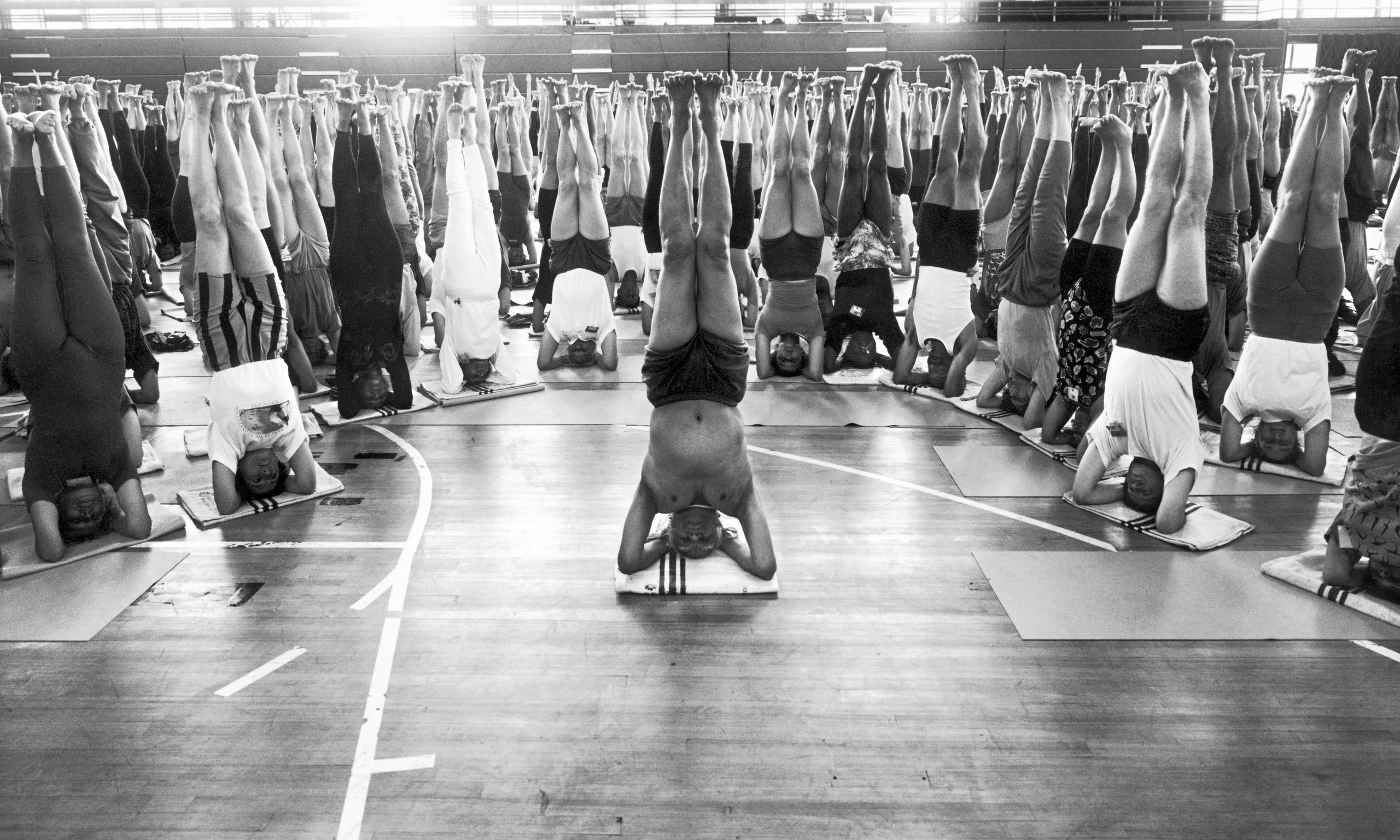
The spread of Yoga in recent years has seen an astonishing acceleration, both nationally and internationally, culminating, emblematically, in United Nations General Assembly Resolution 69/31. The anniversary of the International Day of Yoga sanctioned by the United Nations every summer solstice, in fact, not only sealed the worldwide trend of growing interest and audience toward this practice, but attested to its potential capital value as a contributor to individual and collective well-being and health[1].

After the motion of jubilation that has been shared by the legions of yoga practitioners, teachers and schools around the world - who will henceforth be able to boast of such recognition - it is now time for the 'yoga industry' to come to another, less self-celebratory kind of reflection, namely: is this enormous expectation of yoga practitioners triggered by the United Nations well placed?


Let two historic Italian Yoga Associations - YANI[2] and LOY[3] - play devil's advocates for these few lines, guiding you through a perhaps somewhat uncomfortable but necessary reflection on the national yoga market. Yes, 'market': because the interplay between the growing 'demand for yoga' (classes, courses, seminars, trainings, trips, retreats, tools, clothing, magazines, etc.) and the many and varied 'supply of yoga' (in the U.S. alone, one can count at least 25 different main types of postural yoga, but that is certainly an underestimate) has triggered neither more nor less a 'market', in the economic sense of the term: exchanges and interactions between 'yoga providers' and 'yoga buyers'.


Well, with nearly 3 million regular practitioners in Italy,[4] and growing, it is urgent to reflect on the soundness of a profession, that of the yoga teacher, until recently completely deregulated and self-referential. Net of the very high expectations in terms of individual and collective well-being that the term yoga now carries, what is the real qualitative landscape of Italian yoga teachers and of the national 'yoga world'?

It is not up to us to make judgments, but it is really difficult for those who, as non-experts, enter this variegated world to juggle the multitude of proposals and the plurality of subjects offering themselves as providers of 'yoga services'. Even more difficult, navigating the choice: which type of yoga, which teacher, which school? And then again, who can bear the title of yoga teacher, what guarantees for users? How to put oneself in the right hands? Very non-trivial questions in light of the current turnover.


It is here that our brief account begins of a joint effort undertaken by YANI and LOY-begun in 2013 following the entry into force of the national standard No. 4/2013 on unregulated professions-that led, on December 6, 2016, to the entry into force of the UNI 11661:2016 standard on the professional figure of the Yoga Teacher: a beautiful synergy, despite the diversity of the reference yoga settings and traditions, which allowed us to reach the conclusion of the process for the drafting of the standard, the first example in Europe and the World. In the standard there are, in fact, no answers to the almost Hamletic question 'what is true Yoga,' which some people ask, somewhat vaguely. Drafted with the intention of applying rigor and uniformity of approach, the UNI 11661:2016 standard defines the competencies, knowledge and skills of the professional yoga teacher, in accordance with the provisions of Law No. 4/2013 on unregulated professional figures, in accordance with the European Qualifications Framework EQF. Although not binding, the UNI standard therefore comes to constitute-where there is a countervailing consideration of an economic nature-the sole, indispensable reference in relation to the requirements of the professionalism of the yoga teacher. From pure commercialization to professionalization, the step has been a long one, but a necessary one.


Nearly 4 years after its enactment, it is more urgent than ever to reemphasize the existence of this normative reference. Last October XX, in fact, YANI, LOY and AIASCERT-the latter an accredited body for the certification of people according to the UNI CEI EN ISO 17024 standard-published the certification scheme for Yoga Teachers according to the UNI 11661:2016 standard, which officially inaugurates the possibility for professionals in the sector to certify themselves to UNI standards.

In other words, and herein lies the real revolution, where until now there were only self-referential and non-super partes certifications - think of the countless certificates and licenses of 'yoga teachers' issued for a fee by various schools, associations and bodies in the sector after even very short training courses - today professional teachers will be able to access a process of admission, evaluation and certification according to an international standard (the UNI CEI EN ISO/IEC 17024 norm), supervised annually by a super partes Accreditation Body (Accredia, in Italy).


Professional competence in the performance of one's work is a general aspect to which each of us is certainly sensitive and which influences many daily purchasing choices: competence is rightly part of our expectations of others. All the more reason why it is, in our view, a value and a duty for those who practice a profession that can have a very beneficial effect on individual and collective well-being, but which could equally put practitioners at risk if practiced without adequate competence.

The UNI certification of the yoga teacher is therefore not a merely bureaucratic act but should be understood as the beginning of a virtuous evolution of the national 'yoga market,' which we hope will establish itself in Italy as an element of objective guarantee of quality, both with public bodies and institutions and with the public of practitioners, following the trend already detectable in other professional cultures.


[1] [...] Emphasizing the fact that global health is a long-term development goal that requires closer international cooperation through the exchange of good practices aimed at building better individual lifestyles free of excesses of all kinds,
Recognizing that yoga provides a holistic approach to health and well-being,

Recognizing also that a wider dissemination of information about the benefits of yoga practice would be beneficial to the health of the world's population [...]

[2] YANI: Yoga National Teachers Association, founded in 1999.

[3] LOY: Light On Yoga

[4] Nielsen survey for COOP 2019.

Receive my free weekly newsletter

Sign up
Newsletter Icon
RELATED ARTICLES

Seasonality: the climate outside and the climate inside us

Transformation, ‘seasonality’, is a fundamental principle to be taken into consideration in personal yoga practice. Every day our embodiment experiences bio-chemical changes in order to adapt to external stimuli, generating an internal response and continuous transformation. In other words, every day we find ourselves dealing with a ‘climate outside’ and with a ‘climate inside’ us. In this series of four sequences I address this fascinating topic by proposing a practice for each climate season: Fall, Winter, Spring and Summer.

Breathing de-automatization: proper timing and proper results

"The body, the limbs, the psyche, the organs of action and sensory ones are very 'ours'.
Breathing is not as much "ours". However, breathing is more than anything else 'for us'."
Prashant Iyengar, "Pranayama: a Classical and Traditional Approach"

On teaching in Iyengar Yoga: safe, accurate, transformative, profound

Doing yog-asana and pranayama risk-free and learning gradually, with accuracy, to achieve lasting benefits and making the body a place of meditation. These are the ingredients of Iyengar teaching.