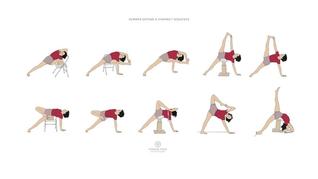
Summer extend&compact - Part 4

Summer extend&compact - Part 4
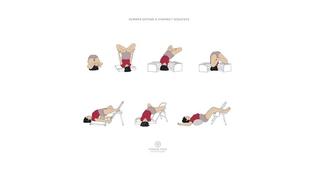
Summer extend&compact Part 8
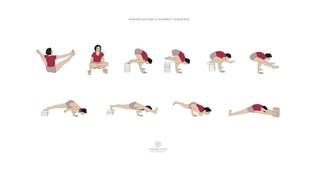
Summer extend&compact Part 7
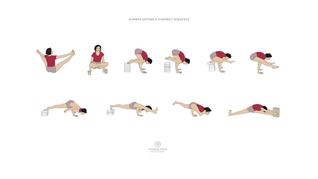
Summer extend&compact - Part 6
Summer extend&compact - Part 5
Spring blooming sequence
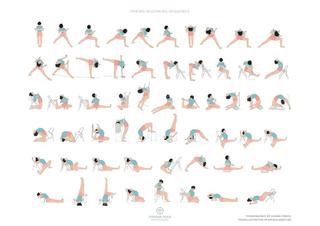
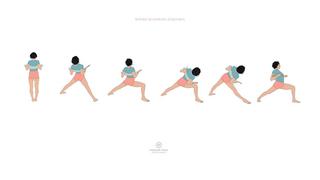
The Spring Blooming Sequence focuses on awakening and expanding the heart–chest region, inspired by the natural renewal and vitality of the spring season. Through specific yogāsana and prāṇāyāma practices, the sequence aims to create space in the thoracic area, supporting healthy posture, diaphragmatic movement, and circulation. Particular attention is given to the relationship between posture, emotional states, and the regulation of the autonomic nervous system. By encouraging openness in the chest and balanced breathing, the practice seeks to foster psychological lightness, resilience, and a sense of vitality. In this way, the sequence supports the broader goal of yoga as a lifelong practice of self-regulation and physiological balance.
Winter immune - Part 6
Spring blooming - Part 1
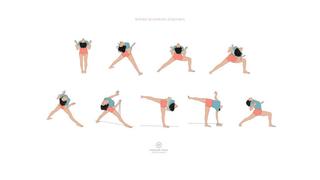
Spring blooming - Part 2
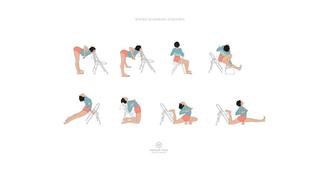
Spring blooming - Part 3
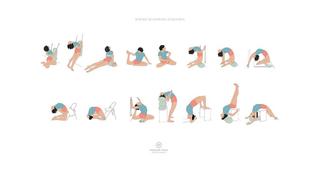
Spring blooming - Part 4
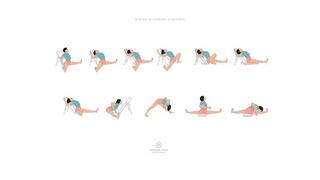
Spring blooming - Part 5
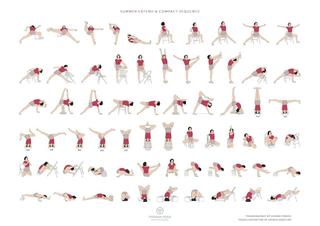
Summer extend&compact sequence
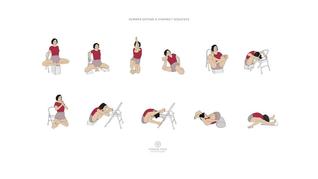
The Summer Sequence emphasizes expansion, stability, and self-regulation through centrifugal and centripetal asanas. Limbs and core work together to create space, lift, and breath while grounding provides stability for safe extension. The practice mirrors physiological and cognitive pulsations, integrating expansion, contraction, and sensory awareness. Pranayama further enhances thoracic and interoceptive perception, linking body and cognition. Overall, the sequence fosters adaptability, energetic balance, and a deep connection between mind and body.
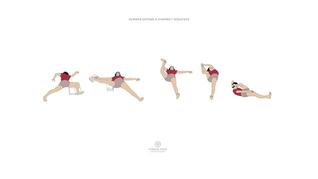
Summer extend&compact - Part 1
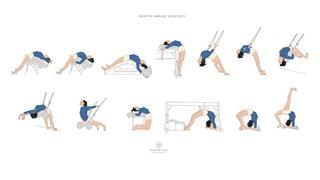
Winter immune - Part 3
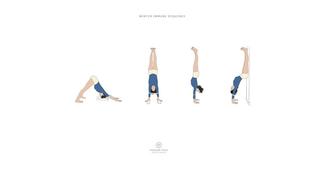
Winter immune - Part 2
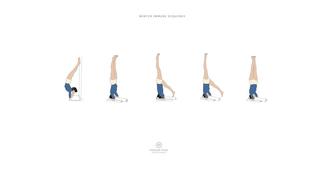
Winter immune - Part 4
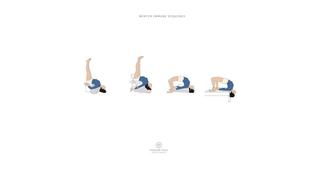
Winter immune - Part 5
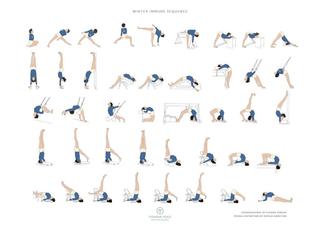
Winter Immune sequence
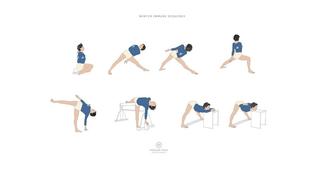
Winter immune - Part 1
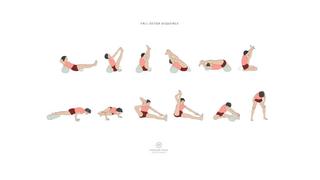
Fall de-tox - Part 2
The abdominal area is here ‘divided’ into three portions and the sequence is aimed at contacting and stimulating each of them. The upper digestive tract is where the stomach and liver are. The central part of the abdomen is mainly occupied by the gut; while the lower part is where bladder, rectum, prostate and uterus are. Kidneys and adrenals glands occupy the posterior part of the upper abdominal cavity. Moreover, being aware of research evidences that tend to establish a strong relationship between stress-related psychiatric symptoms such as anxiety with gastrointestinal disorders, I also pay attention to embodied practices that can help balance in the autonomic nervous system.
The rationale of this yog-asana and prāṇāyāma sequence is to indirectly ‘touch’ and stimulate each of these three parts of the abdominal cavity and exert a positive effect on the gut-brain axis thanks to meditative prāṇāyāma techniques.
The second part of the sequence is composed by abdominal asanas. By tonifying the abdominal wall and core of the body, they contribute to draw blood to that region and ameliorate the blood supply to the abdominal organs. In particular, #haṁsasana (the swan pose) creates a direct compression on the abdominal aorta that stimulates the affected organs. After having worked on the front region, the practice of #akarnadhanurasana 1 and 2 activate the posterior lumbar area.
Finally, the #mahāmudrā and standing #uddhyanabandha are particularly relevant since they have an impact on the whole length&width, front&back of the abdominal/lumbar area: from the uterus and prostate up to the stomach, as well as on kidneys and adrenals.
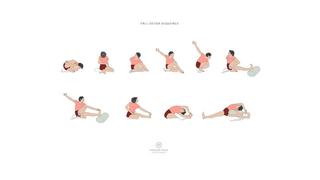
Fall de-tox - Part 3
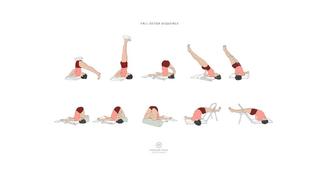
Fall de-tox - Part 5
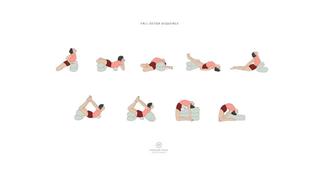
Fall de-tox Part 4
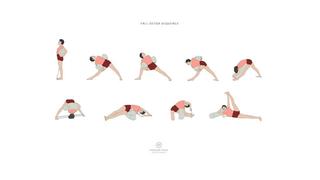
Fall de-tox Part 1
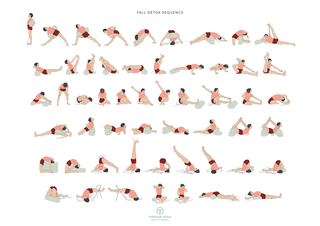
Fall de-tox sequence